
Open Downloadable Version | Email me | Home
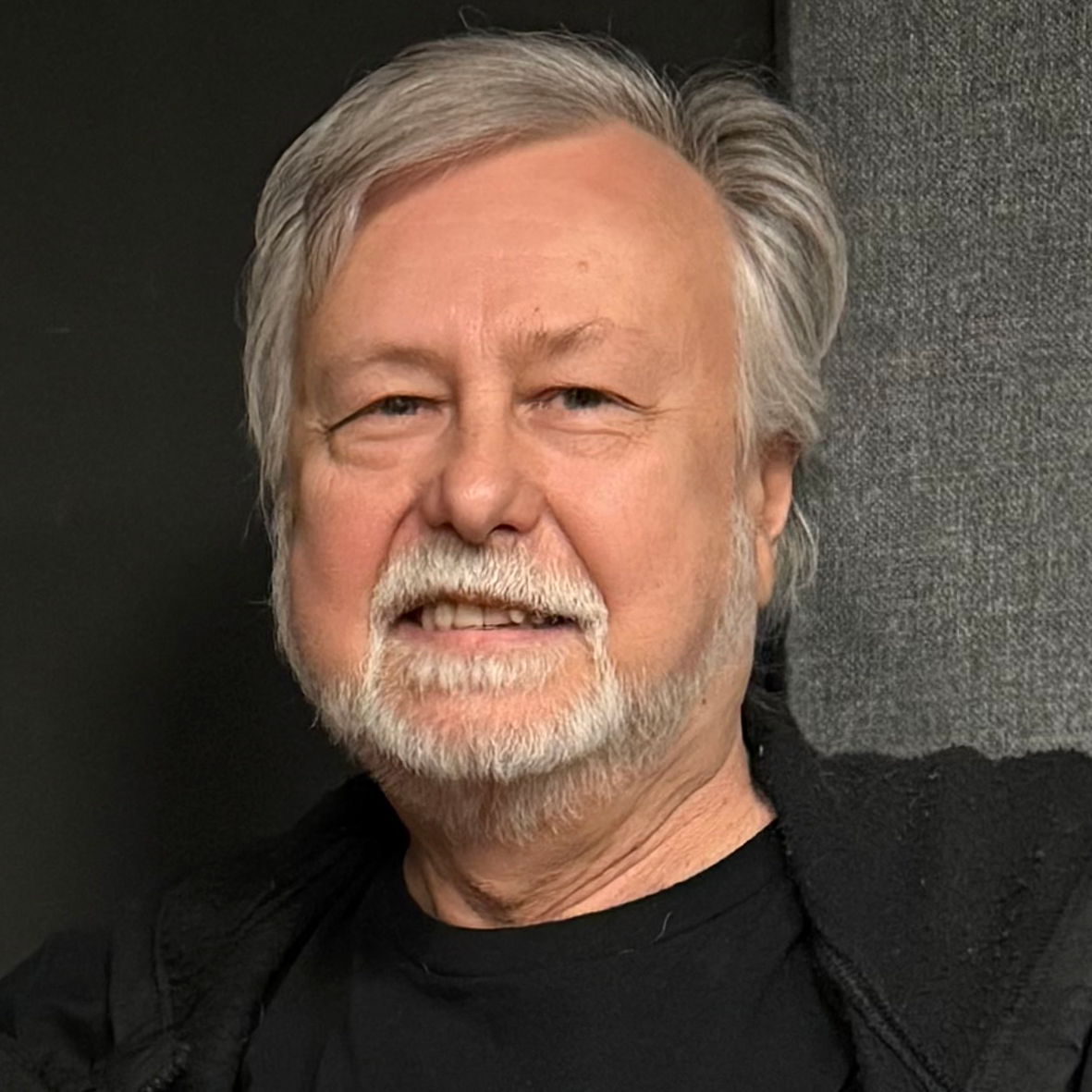
I consider myself a fringe transmedia conceptual artist and have experimented with all kinds of forms: moviemaking, music, performance, writing, drawing, painting, sculpture, game design. I also believe that one can think of one’s life as a work of art. In A Man Without a Country Kurt Vonnegut wrote:
Go into the arts. I’m not kidding. The arts are not a way to make a living. They are a very human way of making life more bearable. Practicing an art, no matter how well or badly, is a way to make your soul grow, for heaven’s sake. Sing in the shower. Dance to the radio. Tell stories. Write a poem to a friend, even a lousy poem. Do it as well as you possibly can. You will get an enormous reward. You will have created something.
I accept the notion that we can think of art as a spiritual practice and I have practiced my art since I can remember. Part of my practice has always been encouraging others to get involved in the joy of creativity.
After receiving my Bachelor of Fine Arts degree from the School of the Art Institute of Chicago (SAIC) in 1981, I chose not to pursue a master's degree — at the time, frankly, the prospect of all that academic writing held no appeal for me. Looking back across the decades since, I came to see the choice differently: life acted as my art teacher and mentored me toward the mastering of my art practice. SAIC hired me anyway (without an advanced degree) and I began to teach there as an instructional technician and adjunct professor in their video art department known at that time as the Video Area. The SAIC Video Area in the 1980s was a unique place. Founded by artist Philip Lee Morton, it provided students with two relatively new and very exciting media for artistic exploration: video synthesis and digital computers.
The Sandin Analogue Image Processor (initially designed 1971 to 1973 by Professor Daniel J. Sandin at the University of Illinois) is a video synthesizer that allowed artists to experiment with video techniques that were not generally available to art schools because of the high cost of television equipment at that time. The Image Processor is a very interesting device from a conceptual art point of view. It was a relatively low cost device which artists could build themselves and then use to make video art and program performances. I liken it to a video iteration of Buckminster Fuller's design science. The equivalent of many high cost tools of the television industry were now in the hands of artists.
The original version of GRASS was developed by Thomas A. DeFanti for his 1973 Ohio State University Ph.D. thesis. GRASS (GRAphics Symbiosis System) was a programming language created to script 2D vector graphics animations. It quickly became a hit with the Chicago artistic community who wanted to experiment with the new medium of computer graphics. A later version that was adapted to support raster graphics was known as ZGrass. The last version of GRASS was RT/1 (Real Time 1), an iteration of GRASS that separated the language from the display model and allowed it to be ported to other platforms. Versions existed for DOS, Windows, SGI using OpenGL, HP-UX, AIX, Macintosh, Amiga.
Chicago’s home grown video art movement was based around the Sandin Image Processor (IP) and DeFanti’s digital computer innovations. I became intimately involved with these technologies because one of my tasks as an employee of the SAIC Video Area was to maintain and upgrade the equipment. Our faculty, students, and I made many works of experimental video art during those years.
I began working with video art mixed with image processing, including an early portrait piece, Video Portrait of Char and Mike (1985).
I made works based on a theory I named “Video I Ching” (since shortened to V-Ching) where I would record material from TV and collect sequences from movies and TV distributed on VHS tapes. I would run these collected sequences through a technical process whereby the scenes would mix together randomly. I would then edit a “narrative” from what I found the most interesting and intriguing composites. I made many experimental works based on this aesthetic method. History of the Moon and Electromagnetic Fields Forever represent two examples. V-Ching still informs my art making.
Another project I worked on quite a bit during my time at SAIC was a role-playing game based on Dr. Timothy Leary's theories on the past and future evolution of the human nervous system. Leary approved of this project. With the working titles of Black Wholes and Blobs and Destiny, I was unfortunately not able to bring the game to complete fruition. I'd like to find time to finally finish this project.
After my years at SAIC I took up with a Chicago company called Rising Star, a creative computer technology reseller. Some of the people at Rising Star would become creative collaborators. They included John Steven Keith, Barbara Ann Perry, John S. Banks, Jesse Keeler, Steve Perry. It was also at Rising Star I met my art-life partner Patricia Ann Happel. Under the guise of our company Cyberscope Wizards, my wife Trish and I would create what I like to call stealth enlightenment programming. I signed up as a producer at the Chicago Access Network and we created the award winning experimental television series Abductions with the Alter Boy. This CAN TV program has been featured in the documentary film Access Nation. The series is now available free on YouTube; it was also released on limited-edition DVD, now out of print. After Rising Star I continued my experimental video and audio art and worked as a freelance cinematographer, video editor, motion design artist, sound designer.
The Cyberscope Wizards continue producing video art and experimental TV, movie, and music projects. In addition, every spring the Cyberscope Wizards host a celebration of art, electricity, chaos. We unleash our primal spirits, videotaping our performances and the transformative recycling of outmoded technology into high-voltage excitement. We call it Cybernalia.
Bachelor of Fine Arts, School of the Art Institute of Chicago (1981). Associate of Arts, Fine Art, Morton College, Cicero, IL (1978).
Alongside my studio practice, I teach video and motion design at three Chicago institutions. This fall I'm teaching Digital Media Toolkit and two sections of Motion Graphics I at Columbia College Chicago, where I have also previously taught Motion Graphics II. I teach Digital Video I and Digital Video II at Harold Washington College / City Colleges of Chicago, and I teach editing at Chicago Filmmakers. My public instructional series Post-production Instruction with Professor Bo supports my students in learning Adobe Premiere Pro and After Effects. My pedagogy is grounded in my own practice: Cybernetic Aesthetics, V-Ching, video feedback, and AI-assisted work with disclosure.
Skull Club, Chicago (circa 1965–present), Founder. Bohacz & Frenz, Chicagoland band (circa 1977–present), Founding member. Leonardo da Video, Chicago (early to late 1980s), Founder. Cyberscope Wizards, Chicago (1994–present), Founder. Cybernalia, Chicago (2001–present), member of the founding group and video archivist. Cyborg Club, Chicago (founded November 11, 2008), Founder.
In October 2026, my video SurgiQuik Liposuction Hut, our first completely AI-generated work, was selected as an Official Selection at UFF… Underground Film Festival 2026, October 29–31 at the Rosini Theatre in Lucignano, Italy. In August 2026 it was also selected as an Official Selection at AI Film 3 - AI Film and Art Festival, Arizona (Year III), screening in Phoenix September 17–19, 2026 — the first festival selection for an AI-generated work in the Cyberscope Wizards catalog.
In September 2026, my video The Machines Possessed Me (Abstract v2) Part 1 was selected as an Official Selection at the International Experimental Film Festival, Athens, Greece, screening October 16, 2026, and, along with my music video Arise Robot Minds (v1.3), as an Official Selection at The Psychedelic Film and Music Festival, New York (October 13–17, 2026), where The Machines Possessed Me screens October 17.
In summer 2026, stills from my early Sandin Image Processor videos Untitled (1984) and Video Portrait of Char and Mike (1985) were featured in SandZine #1, a print compilation of Sandin IP video art by 12 artists spanning 1984–2026, edited by SAIC printmaking student Al Silva and produced in connection with James Connolly's SAIC Spring 2026 Art History: Media Genealogies course.
On April 25, 2026, Cybernalia 2026 premiered SurgiQuik Liposuction Hut along with Prayers For Our President and Bobby Brain Worm — the first AI-assisted video art in the Cyberscope Wizards catalog. Special credit goes to David Bright for scripting Prayers For Our President.
In May 2026, The Skull Club: A Short Documentary — a Columbia College Chicago student film about the Skull Club, directed by Becca French — premiered at the Columbia College Chicago Manifest Arts Festival. The original short version was recognized with a Jury Prize in the Columbia College Chicago Take 1 Student Shorts Fest.
In October 2025, my video The Machines Possessed Me (Abstract v2) Part 1, my music video Arise Robot Minds (v1.3), and my TV series episode Abductions with the Alter Boy: Brain Taco Module 1.2 each won Awards of Recognition at the IndieFEST Film Awards, La Jolla, CA.